Why I built a 5-day design service (and why most landing pages never convert)
Most landing pages don’t fail because of traffic or testing. They fail because people don’t trust them. Here’s why clarity matters — and how removing distractions drove a 116% uplift for BetterWorld.


If you’ve read some of my earlier posts, parts of this may sound familiar.
That’s intentional.
Over the years, I kept seeing the same pattern. Teams would invest in more traffic, more tools, more tests — yet conversion rates barely moved. Not because they lacked effort, but because they were working on the wrong problem.
That’s why I built the 5-day design service.
Not for speed. Not for efficiency.
But because most landing pages fail long before traffic or A/B testing becomes the real issue.
They fail because people don’t trust them.
This post explains what that actually means — and how clarity drove a 116% uplift for BetterWorld when we focused on the fundamentals first.
It’s rarely a traffic problem
When conversions stall, the default response is almost always the same: get more traffic.
More budget. More channels. More reach.
But traffic doesn’t fix a weak page. It amplifies it.
If visitors don’t immediately understand what you offer, who it’s for, or why they should believe you, sending more people to that page simply means more people deciding “no” faster.
That’s why I often start with a simple question:
Would you trust this page if you landed on it for the first time?
If the answer isn’t a clear yes, traffic isn’t the problem.
What trust looks like on a landing page
Trust isn’t about liking a brand. It’s about confidence.
On a landing page, it usually comes down to four things:
- Clarity: Do I instantly understand what this is and why it matters to me?
- Credibility: Do I believe you can deliver on what you promise?
- Safety: Does this feel like a low-risk next step?
- Consistency: Does the message match what brought me here?
When any of these are missing, hesitation creeps in. And hesitation kills conversions.
Most visitors make that judgment within seconds.
A real example: how removing distractions drove a 116% uplift for BetterWorld
BetterWorld is a good example of how clarity is often created by removing friction, not adding more explanation.
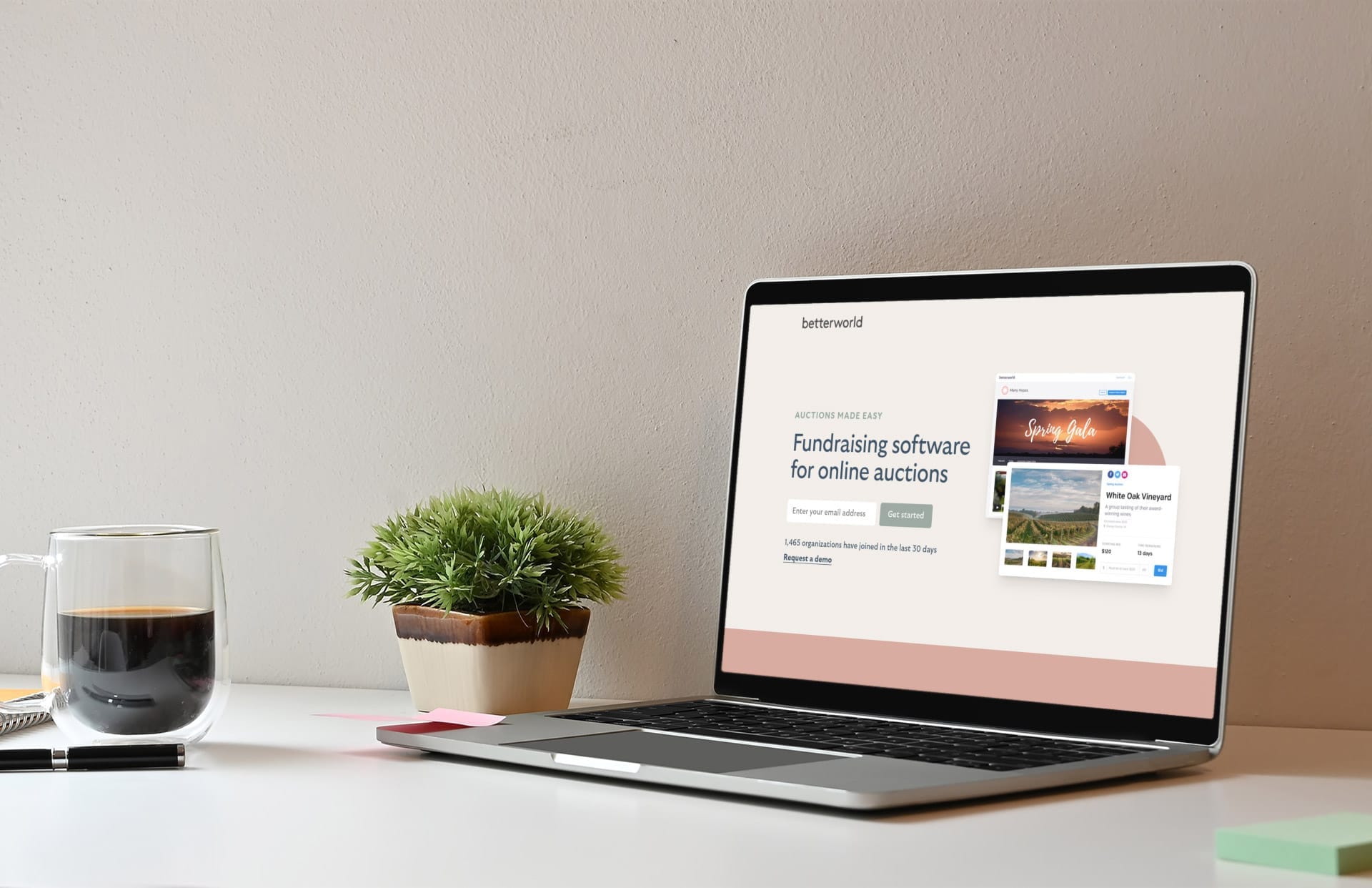
In the original version, the page asked visitors to make too many decisions at once. Multiple paths, competing elements, and secondary actions pulled attention away from the primary goal.
The value was there — but the path to action wasn’t clear.
We didn’t start with traffic or testing. We started by simplifying the experience.
The hypothesis was straightforward:
If BetterWorld reduced distractions and narrowed the number of choices, more visitors would focus on the core action — creating a fundraising page.
So we:
- Trimmed down competing links and options
- Cleared the path to a single, primary action
- Reduced cognitive load so the next step felt obvious
The result was a 116% uplift in conversion rate, with Variant B clearly outperforming the original and reaching full statistical significance.
Clarity, in this case, didn’t come from saying more — it came from removing what didn’t need to be there.
If you want the full context behind that experiment, I’ve written a more detailed breakdown of the test setup and learnings here.
When testing turns into guessing
Once trust and clarity break down, testing is often where things unravel completely. I once spoke with a SaaS company that proudly told me they had 130 ideas submitted by 15 colleagues – and 12 tests running at once 😅.
That sounds like momentum. In reality, it’s noise.
With that many tests in motion, focus disappears. Results become harder to trust. Tests influence each other, and learnings get blurry.
A/B testing isn’t about volume. It’s about intent.
Every test should start with a hypothesis:
If we make this change, then this metric will improve, for this reason.
When you can clearly articulate that, testing becomes a learning engine.
When you can’t, you’re just guessing.
Why does more traffic make trust problems worse
If your page lacks trust, more traffic doesn’t help. It hurts. And when trust is missing, the instinctive response is almost always wrong.
You spend more budget, collect weaker signals, and teach more people to ignore your brand. Retargeting performs worse. Follow-ups lose impact. The whole funnel suffers.
Fixing trust first changes everything that comes after.
Where I would start if I had one day with your page
This is exactly where I begin when trust feels off. If I had to prioritise, I’d focus on four things:
- Tighten the promise
Make the headline about the outcome, not the product. - Strengthen credibility
Use proof that’s specific, relevant, and recognisable to your audience. - Reduce perceived risk
Clarify what happens after the click. - Simplify the path
One primary message. One primary action.
These are usually the changes that unlock the biggest gains.
Why the 5-day design service exists
After seeing this pattern repeat across companies, I realised something.
Most teams don’t need more ideas. They need clarity, focus, and momentum.
The 5-day design service exists to strip a landing page down to what actually matters, rebuild it with intent, and give teams a foundation they can test and scale with confidence.
Not as a shortcut. But as a reset.
A final thought
A/B testing, traffic, and tooling all have their place.
But none of them work well on top of a page people don’t believe in.
Great testing doesn’t replace insight. It proves it.
If you’re unsure whether your conversion problem is really a traffic issue or a trust issue, I’m happy to take a look.
Send me the URL to one of your key landing pages, and I’ll share a few concrete observations.

Want fresh eyes on your landing page?
I’ll review one of your pages and share quick, actionable feedback on how to improve clarity, relevance, and conversion rate — completely free.